Why In-Game Live Betting Drains Bankrolls Faster Than Pre-Match Bets
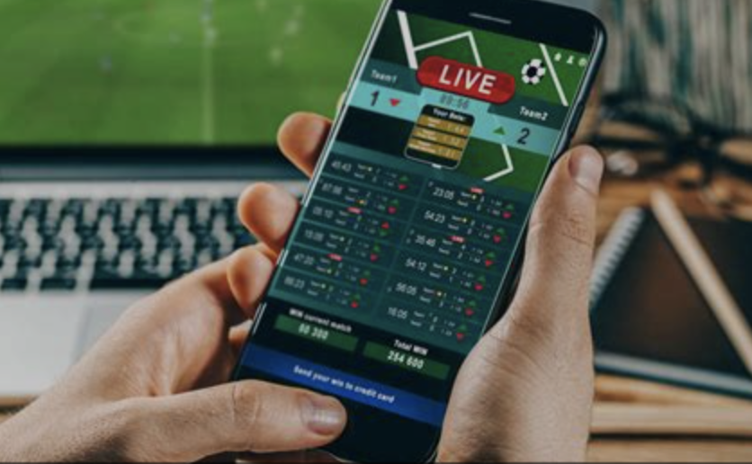
The expansion of mobile sports wagering has fundamentally transformed how people interact with athletic competition. A decade ago, placing a bet required thorough handicapping hours before kickoff, locking in a number, and waiting through several hours of gameplay to see whether the analysis held up. Today, sportsbooks live inside smartphones, generating hundreds of new markets every minute while a game unfolds.
Every possession, drive, timeout, and pitch now comes with shifting numbers. While sportsbooks market in-game wagering as an opportunity for sharp fans to capitalize on real-time game flow, the reality for most bettors is starkly different. Live betting is systematically engineered to accelerate capital loss. It strips away the deliberate discipline that protects a bankroll, replacing it with high-frequency friction that favors the house at nearly every turn.
Understanding why live betting depletes bankrolls so much faster than traditional pre-match wagering requires looking at three distinct realities: the underlying mathematics of in-game lines, the biological vulnerabilities of human decision-making under time pressure, and the predatory structure of modern sportsbook software.
The Hidden Cost of the Live Market Hold
The most mathematically damaging element of live betting is the exorbitant price tag attached to every ticket. In traditional pre-game markets, sportsbooks operate with relatively thin margins on major sports. A standard point spread or total in the NFL or NBA typically carries standard odds of -110 on both sides, which translates to a theoretical house edge, or vig, of roughly 4.54 percent. While overcoming a 4.5 percent hurdle over a large sample size is already difficult for recreational bettors, it is at least manageable with disciplined line shopping and solid modeling.
Once the whistle blows and the game goes live, that pricing structure deteriorates rapidly.
Because oddsmakers cannot manually price every micro-event across dozens of concurrent games, they rely on automated algorithmic models to update lines instantaneously. To protect themselves against data latency, sudden game shifts, and sophisticated syndicates using faster feeds, sportsbooks aggressively widen their spreads.
A live spread or total rarely sits at -110 on both sides. Instead, bettors routinely see splits like -115 and -115, -120 and -108, or even wider gaps on derivative markets such as alternate lines or team totals. In many cases, the implied hold on live markets jumps to 7 to 12 percent.
On micro-betting markets—such as predicting whether the next baseball pitch will be a ball, strike, or hit, or whether an NFL drive will yield a punt or turnover—the hold can exceed 15 to 20 percent. Paying double or triple the transaction cost on every single wager makes sustained long-term profitability virtually impossible. Even if a bettor has decent intuition about the direction of a game, the sheer weight of the house edge grinds their capital down long before their edge can materialize.
Velocity and the High-Frequency Trading Trap
Bankroll management is ultimately an exercise in controlling turnover. In pre-match betting, turnover is naturally constrained by time and scheduling. If a bettor decides to back three college football games on a Saturday afternoon, they risk a fixed percentage of their bankroll—say, 1 to 2 percent per game—and their exposure remains stable for three and a half hours. The outcome is binary, the capital is committed, and no further decisions are required until the games conclude.
Live betting obliterates this natural pacing mechanism. It borrows the psychological architecture of casino slot machines and day-trading platforms, creating an environment where a bettor can cycle through dozens of transactions within a single quarter of play.
When money turns over at high velocity, mathematical realities compound exponentially. If an individual places five bets over the course of an entire week at a 5 percent house edge, the financial drag on their total bankroll is slow and noticeable. If that same individual places twenty bets across a two-hour basketball game at an 8 percent house edge, the compounding toll is devastating.
High wagering frequency dramatically shrinks the time horizon required for the house edge to swallow a bankroll. Bettors do not run out of money because they lacked knowledge about the sport; they run out of money because they exposed their principal to the house tax far too many times in a compressed window.
The Illusion of Edge and the Broadcast Delay
The central selling point of live wagering is the premise that an attentive fan can spot real-time trends before the sportsbook’s algorithm adjusts. Bettors watch an NFL quarterback hold his shoulder after a sack, notice a basketball team’s body language slouching during a transition run, or observe heavy rain beginning to fall, and they rush to exploit the moment.
This perceived edge is almost always an illusion, driven by two structural disadvantages:
Information Asymmetry and Latency
Most fans watch games through residential cable feeds, satellite dishes, or internet streaming platforms. Streaming latency typically lags behind live stadium action by anywhere from 15 to 45 seconds. Even traditional cable broadcasts lag by five to ten seconds.
Sportsbooks do not rely on public television feeds. They subscribe to official, low-latency enterprise data streams powered by sensors and court-side data scouts who log events in sub-second intervals. By the time a viewer sees a three-pointer leave a shooter’s hand on their television screen, the sportsbook’s algorithm has already registered the basket, paused the market, recalculated the live spread, and adjusted the possession expectations. Bettors attempting to react to visual cues on a broadcast are consistently reacting to stale information while betting against automated algorithms that operate in real time.
Misinterpreting Variance as Momentum
Human beings are wired to find narratives in random distributions. In sports, this manifests as an obsession with “momentum.” When a basketball team goes on a 10-0 run, live bettors immediately assume the trailing team has collapsed, driving the live line down to an inflated price.
In reality, athletic competition is filled with high-frequency noise and short-term variance. Teams miss open shots, recover loose balls on fluke bounces, and experience standard regression. While the public piles onto the team riding a hot streak at an inflated live price, the sportsbook happily absorbs the public money on numbers that have swung far beyond the true statistical reality of the matchup. Bettors routinely buy high and sell low in the live market because they mistake normal scoring swings for permanent shifts in talent or game script.
Psychological Friction and Tilt Cascades
Pre-match betting enforces emotional boundaries through structural delay. If an early morning pick loses on a missed field goal at the buzzer, the bettor is naturally frustrated, but they have time to breathe, step away from their desk, and process the loss before making their next move.
Live betting eliminates emotional reset periods entirely. When a wager fails during live gameplay, the platform immediately offers a dozen subsequent opportunities to win that money back within minutes. This dynamic accelerates tilt—the psychological state where emotional frustration supersedes rational decision-making.
A common scenario illustrates the destructive pattern:
A bettor takes a pre-match position on an underdog at +3.5. Late in the second quarter, the favorite breaks off a long touchdown run, putting the bettor’s ticket in jeopardy. Experiencing the discomfort of an impending loss, the bettor turns to the live market to hedge their position, taking the favorite at -7.5 live to minimize downside. Two drives later, the underdog kicks a field goal to cut the deficit to seven points. The bettor now finds themselves in a narrow corridor where both bets carry heightened risk, having committed twice as much capital to the same game while paying the house two separate layers of vigorous margin.
When live bets lose, the impulse to double down on the next possession or the second-half total is overwhelming. Because mobile sportsbooks make confirmation instantaneous, the friction between experiencing a loss and placing a revenge wager drops to zero. A single poor quarter can trigger a cascade of impulsive wagers that wipes out a bankroll that took months to build.
Structural Traps Within Mobile Interfaces
The software design of consumer sportsbooks is carefully calibrated to facilitate impulsive behavior. Live betting sections are highlighted with flashing green and red odds indicators, countdown timers, and changing totals designed to induce urgency.
This sensory design exploits the cognitive fear of missing out. Bettors are led to believe that if they do not tap the screen within three seconds, an advantageous price will vanish forever. This artificial urgency forces users to bypass basic verification steps:
-
Calculating the true implied probability of the price being offered.
-
Evaluating whether the stake size aligns with standard unit allocation.
-
Assessing whether the wager serves a strategic purpose or merely fills a lull in entertainment.
Furthermore, sportsbooks frequently employ auto-accept mechanisms for odds movements. If a bettor hits submit while an algorithm is shifting the line, the software asks whether they want to accept unfavorable odds changes automatically. In the rush of the moment, bettors routinely accept inferior lines just to ensure their action is booked, surrendering critical value before the wager is even live.
Building Discipline in a Real-Time Betting Environment
For bettors who want to preserve their capital, the safest approach to live betting is strict avoidance. The mathematical cards are heavily stacked against the player from the moment the game begins, and the cognitive toll of filtering noise in real time rarely justifies the meager margins available.
However, if live wagering remains part of a broader betting portfolio, it must be governed by rigid operational rules rather than real-time impulses:
-
Pre-Planned Entry Points: Live bets should only be placed if they were identified before the game began. For instance, a bettor might determine prior to tip-off that they like a favorite, but prefer to wait until the team falls behind early to secure a more favorable spread. If that specific scenario occurs, the trigger is pulled; if not, no live bets are placed.
-
Hard Session Limits: Establishing a strict dollar cap on any single contest prevents the compounding loss cascades that occur during competitive, high-scoring games. Once the allotted units for a game are exhausted, the app is closed.
-
Avoiding Micro-Markets: Derivative props based on short-term sequence—such as the result of a single drive or the outcome of a two-minute window—carry the highest hold percentages on the board. Sustainable bankroll preservation requires avoiding high-hold micro-markets entirely and sticking to full-game or half-time totals where liquidity is higher and margins are comparatively narrower.
Pre-match handicapping rewards research, line shopping, and emotional patience. In-game live betting rewards speed, algorithmic precision, and high-frequency turnover—three areas where the sportsbook will always hold an insurmountable structural advantage over the everyday bettor. Protecting a bankroll means playing games where patience has value, rather than entering an arena where rapid-fire decisions steadily transfer wealth to the house.